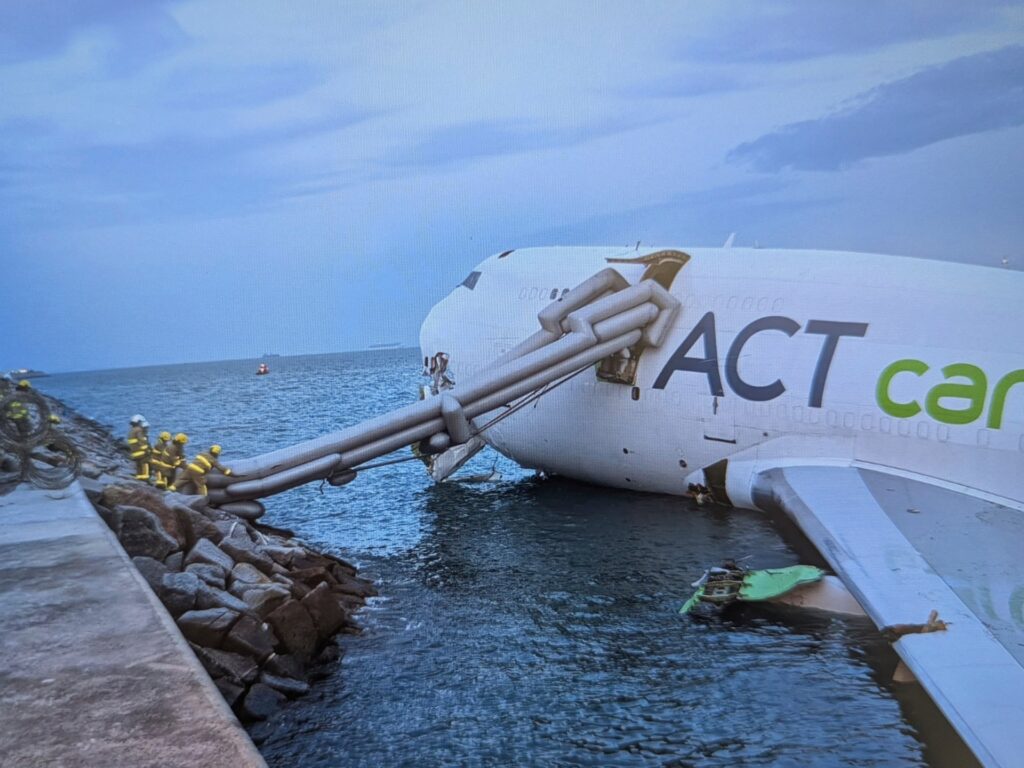
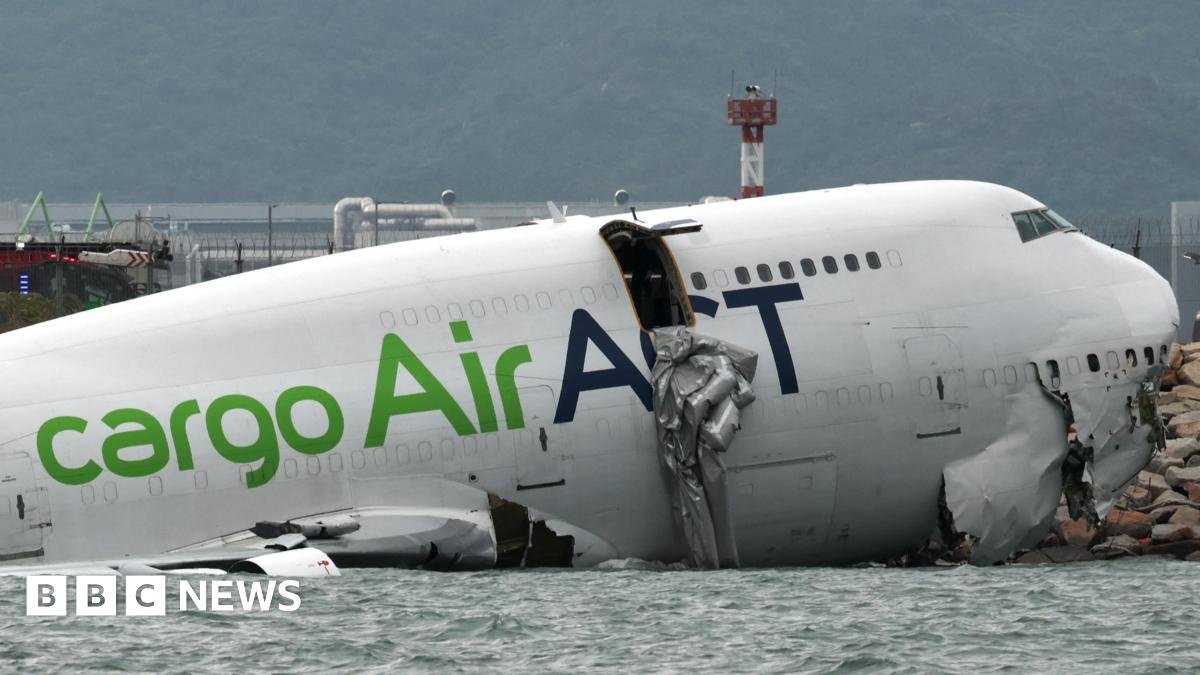
On October 20, 2025, a tragic incident occurred at Hong Kong International Airport. An Emirates cargo plane, a Boeing 747, skidded off the north runway and crashed into the sea. This event resulted in the deaths of two airport security personnel. This report analyzes the facts surrounding the incident, the response from authorities, and the implications for aviation safety.
**Incident Overview**
According to multiple sources, the Emirates flight EK9788 was arriving from Dubai when the accident occurred at approximately 3:50 AM local time. The aircraft veered off the runway, crashed through airport fencing, and collided with a security patrol vehicle, pushing it into the water. The two security staff inside the vehicle, aged 30 and 41, were later confirmed dead (Sources 1, 4, 5).
**Emergency Response**
The rescue operation involved over 200 personnel, including fire services and marine units. The two deceased were retrieved from the submerged vehicle, approximately 7 meters deep in the water (Sources 4, 6). Four crew members aboard the plane survived and were taken to hospitals for treatment. The scene was chaotic, with the plane partially submerged and broken in two (Source 6).
**Investigation and Analysis**
An investigation was promptly launched by the Airport Authority Hong Kong and local authorities. Initial reports indicated that weather and runway conditions were safe at the time of landing (Source 7). Steven Yiu, Executive Director of Airport Operations, stated that the plane had not indicated any distress before landing (Source 6). The focus of the investigation will be on why the aircraft veered off the runway and struck the patrol vehicle (Source 1).
**Safety Protocols and Regulations**
Hong Kong International Airport boasts a strong safety record. The incident marks one of the deadliest aviation accidents since its opening in 1998 (Source 3). Airport officials emphasized that appropriate landing instructions were given to the flight and highlighted the presence of runway signs to guide landing aircraft (Source 1). This raises questions about potential lapses in protocol and the need for enhanced safety measures.
**Conclusion**
The hong kong cargo plane crash represents a significant incident in aviation safety, with severe consequences for the families affected and the broader community. The investigation will provide critical insights into the causes of this tragic event and identify necessary measures to prevent future occurrences. The aviation industry must remain vigilant in maintaining high safety standards to protect lives.
**Recommendations for Future Safety Measures**
1. **Enhanced Training**: Airport personnel should undergo regular training to respond effectively to emergencies.
2. **Safety Reviews**: Regular audits of safety protocols and procedures must be conducted to ensure compliance.
3. **Technological Upgrades**: Investment in advanced landing systems and real-time monitoring can improve operational safety.
4. **Public Transparency**: Authorities should communicate findings from investigations clearly to maintain public trust.
5. **Collaborative Efforts**: Engage with international aviation bodies to share insights and best practices for safety.
This report underscores the need for a thorough analysis of the hong kong cargo plane crash and the implementation of robust safety measures in the aviation sector. The lives lost in this tragic event must serve as a reminder of the importance of vigilance and preparedness in ensuring passenger and personnel safety.

ڷ
-
[1] Two dead after Emirates cargo plane skids off Hong Kong runway …
-
[2] Two killed as cargo plane skids off Hong Kong runway | Aviation …
-
[3] Cargo plane skids off Hong Kong airport runway into sea, leaving …
-
[4] Emirates Cargo Plane Slides Off Hong Kong Runway, Killing 2 …
-
[5] Hong Kong: two people reported killed after cargo plane skids off …
-
[6] 2 dead at Hong Kong International Airport after cargo plane skids off …
-
[7] Hong Kong: Cargo plane slides off runway, killing two people | CNN
-
[8] Cargo plane slides off runway in Hong Kong killing two people …